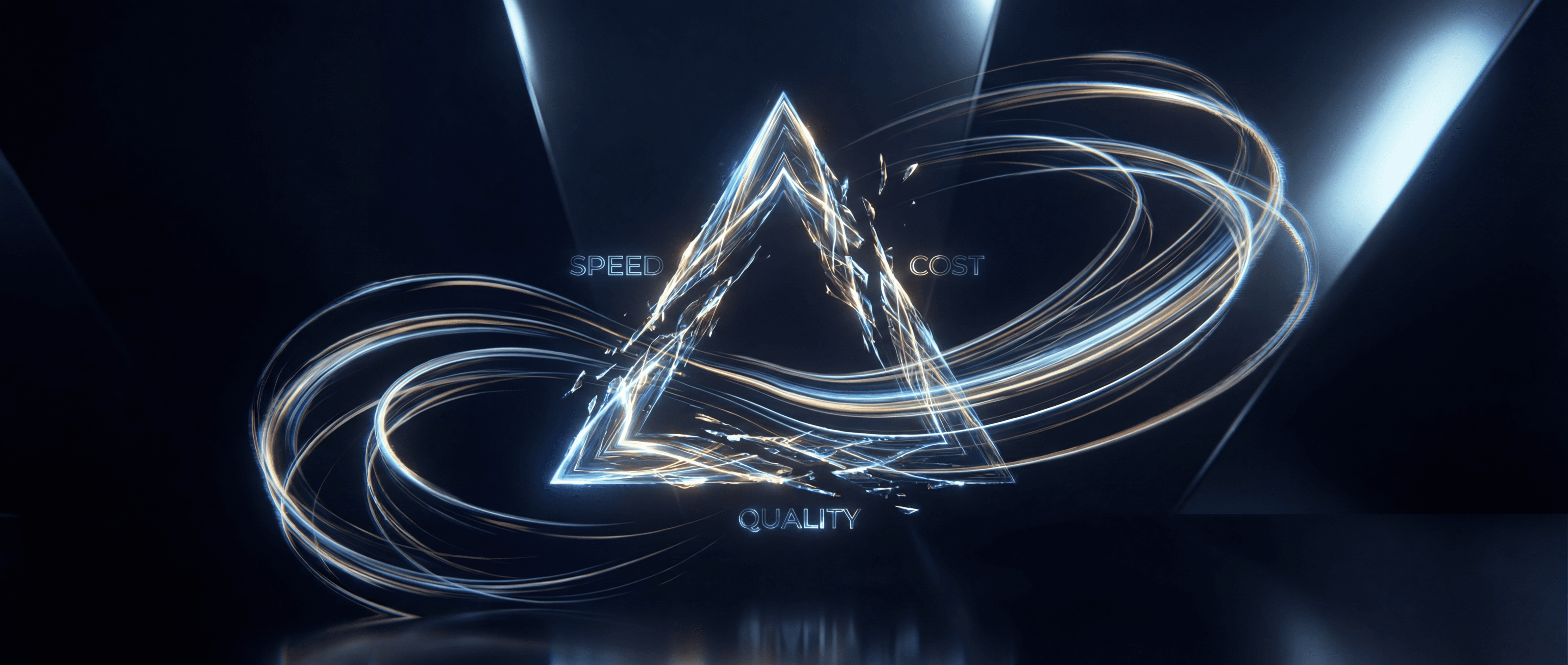
The Emotional Touch In A Digital World
[BY]
Ur Production
[Category]
Tips & Tricks
[DATE]
Jan 1, 2026
A paintbrush never replaced the painter. It expanded the painter’s reach and precision. A camera never replaced the director. It gave the director a new language, a new grammar of light and movement. Editing software never replaced the storyteller. It allowed stories to be shaped with rhythm, pacing, and emotional control that were once impossible.
Not Robots, But Artists. Why the Future of AI Needs a Human Soul
There is a quiet anxiety moving through the creative industries. You can feel it in meeting rooms, comment sections, pitch decks, conference halls, and late night conversations between designers, filmmakers, marketers, founders, and brand leaders. It is rarely shouted. It doesn’t trend. It doesn’t announce itself loudly. But it is always there, present beneath every discussion about technology, efficiency, scalability, and the future of work.
A single question keeps resurfacing. Sometimes it appears as fear. Sometimes as curiosity. Sometimes as resistance. Sometimes as denial.
Will AI replace us?
At Ur Production, we don’t dodge this question. We don’t soften it. We don’t hide behind buzzwords, hype cycles, or false optimism. We confront it directly, without panic, without denial, and without illusions.
And our answer is simple, grounded, and unwavering.
No.
Because tools do not replace creators.
They amplify them.
Creativity Has Always Survived Technology
History has seen this moment before, again and again.
A paintbrush never replaced the painter. It expanded the painter’s reach and precision. A camera never replaced the director. It gave the director a new language, a new grammar of light and movement. Editing software never replaced the storyteller. It allowed stories to be shaped with rhythm, pacing, and emotional control that were once impossible.
Photography didn’t kill painting. Cinema didn’t destroy theatre. Digital tools didn’t erase craftsmanship.
They challenged creators to evolve.
They forced artists to ask deeper questions.
They changed the rules of what was possible.
At every major technological turning point, fear arrived first. Gratitude came later, after creators learned how to bend the tool to their will.
Generative AI is no different.
It is not the enemy of creativity. It is the most powerful creative instrument humanity has ever built. A tool capable of compressing time, expanding imagination, and transforming abstract ideas into tangible visuals at unprecedented speed.
The real danger is not AI itself.
The real danger is using it without intention, without authorship, and without soul.
AI Is a Tool. Vision Is Human.
Generative AI can generate images, videos, voices, environments, characters, and entire worlds in seconds. That reality alone is enough to unsettle people. Speed feels threatening when its meaning is misunderstood.
But speed does not equal meaning.
Output does not equal emotion.
And realism does not equal storytelling.
AI does not know what matters.
It does not understand nostalgia. It does not feel tension. It does not know why a shadow lingering one second too long can make a viewer uneasy, or why silence can sometimes be louder than sound. It does not understand why imperfection can feel more human than technical perfection, or why restraint can be more powerful than spectacle.
AI does not understand context.
It does not understand culture.
It does not understand why certain images resonate differently in different parts of the world.
Those decisions do not come from code.
They come from lived experience.
At Ur Production, we don’t prompt and pray.
We direct.
When we recreated the 1800s Wild West for a beverage brand, we didn’t ask AI to generate a western scene. We made human decisions first. What kind of dust should hang in the air to feel authentic rather than artificial. How the sun should hit the horizon to evoke longing instead of visual noise. What pace the edit should follow to feel timeless rather than trendy. How the color palette should support nostalgia rather than spectacle.
Only after those questions were answered did the tools come into play.
AI executed the vision.
Humans created it.
That distinction is everything.
From Technicians to Storytellers
There is a common misconception that AI driven studios are run by engineers chasing automation, efficiency, and shortcuts. That they prioritize speed over meaning and output over narrative.
That couldn’t be further from the truth.
At Ur Production, our team is built from directors, screenwriters, designers, cinematographers, editors, and creative strategists. People who understand narrative, rhythm, emotion, symbolism, and meaning before they ever touch a tool.
Technology is not our starting point.
Story is.
Tools come second.
When we designed the mythical sea creature for our short film The Kraken, the challenge wasn’t realism. AI can generate realism easily. The real challenge was presence.
We asked ourselves.
Should the creature feel ancient or intelligent.
Should it inspire fear, awe, empathy, or curiosity.
How much should be revealed and how much should remain hidden.
Should the audience fear it, or understand it.
These are narrative questions, not technical ones.
Without a clear emotional framework, the result would have been empty spectacle, impressive, but forgettable. The machine responded only because it was guided by human intention.
Technology followed story.
Not the other way around.
Why Most AI Content Feels Empty
If you’ve scrolled through social media recently, you’ve probably noticed a pattern. Visually impressive content that leaves no lasting impression. Perfect lighting. Hyper realistic details. Flawless composition.
And yet nothing stays with you.
This happens when AI is treated as a shortcut instead of a collaborator.
Many brands rush into AI simply because it’s new. They generate visuals without asking why. They chase novelty instead of narrative. They optimize for algorithms instead of people.
The result is content that looks expensive but feels hollow.
Audiences can feel that.
People don’t connect with technology.
They connect with intent.
At Ur Production, every project begins with human questions. What should the audience feel in the first three seconds. What emotion should linger after the video ends. What perception, belief, or curiosity should subtly shift. What story is actually being told beneath the visuals.
Only after answering these questions do we touch the tools.
That is why our work doesn’t feel synthetic.
It feels directed.
AI as a Canvas, Not a Replacement
The most important shift we advocate is philosophical.
Stop asking what AI can do.
Start asking what do we want to say.
When AI is treated as a canvas, creativity expands.
When it’s treated as a replacement, creativity collapses.
For brands, this shift unlocks real freedom. Freedom from physical location limits. Freedom from traditional production constraints. Freedom from choosing between ambition and feasibility. Freedom to explore bolder creative ideas.
But freedom without direction is chaos.
That’s where we come in.
Our role is not to overwhelm you with possibilities.
Our role is to shape them.
A New Creative Responsibility
With great power comes responsibility, and Generative AI is powerful.
At Ur Production, we believe creators now carry a greater obligation than ever before. To use these tools with purpose, ethics, and restraint.
Not everything that can be created should be created.
Not every idea needs to be visualized.
Not every concept benefits from speed.
We value intentional pacing over overstimulation. Meaning over noise. Story over spectacle. Depth over volume.
Because the future of creativity will not be defined by who uses AI the most.
It will be defined by who uses it best.
An Invitation
This is an invitation to brands, creators, and visionaries who feel that something fundamental is changing.
Not a threat.
Not a gimmick.
But a shift.
Your story deserves more than automated content. It deserves care. It deserves authorship. It deserves a soul.
We are Ur Production.
We don’t just generate videos.
We generate emotions.
The Illusion of Automation
One of the most dangerous myths surrounding Generative AI is the idea of full automation. The belief that creativity can be reduced to a button, a prompt, or a workflow. That once the right model exists, human involvement becomes optional.
This illusion is attractive because it promises efficiency without effort. But it is also profoundly false.
Automation can replicate patterns.
Creativity creates meaning.
AI can remix what already exists, but it cannot decide why something should exist. It cannot judge cultural timing. It cannot sense emotional fatigue. It cannot understand when the world is ready for a certain message, or when it is not.
At Ur Production, we treat AI as an accelerator, not an author. It speeds up execution, but authorship remains human. Direction remains human. Responsibility remains human.
Without that framework, automation becomes noise.
The Difference Between Content and Cinema
The internet is flooded with content. Endless, disposable, forgettable content.
Cinema is different.
Cinema is intentional. It is paced. It is designed to be felt, not just consumed.
One of our core beliefs at Ur Production is that brands deserve cinema, not content.
Generative AI allows us to bring cinematic language into spaces where it was previously impossible, social media, digital campaigns, fast moving product launches. But the language itself must still be respected.
Cinematic storytelling requires structure, tension, release, and emotional continuity.
AI can assist with execution, but only humans can protect the language.
Human Judgment in an Algorithmic World
Algorithms are excellent at optimization. Humans are excellent at judgment.
Optimization asks what performs best.
Judgment asks what feels right.
The future of creative work belongs to those who understand the difference.
At Ur Production, data informs our decisions, but it never replaces them. Performance metrics matter, but they do not dictate narrative choices. Trends are observed, but they are not blindly followed.
Because brands are not built on performance alone.
They are built on trust, memory, and emotional consistency.
Why Human Taste Still Matters
Taste is not measurable.
It cannot be trained purely through datasets.
Taste is developed through exposure, failure, curiosity, and cultural awareness. It is shaped by what you have seen, what you have lived, and what you have rejected.
Generative AI has no taste.
It borrows taste.
At Ur Production, taste is one of our most valuable assets. It is why two teams using the same tools can produce radically different results. One forgettable. One unforgettable.
Tools are equal.
Taste is not.
The Long Term View of Creativity
The real question is not whether AI will change creativity.
It already has.
The real question is who will shape what creativity becomes next.
Will it become faster but emptier.
Or faster and deeper.
At Ur Production, we are committed to the second path. To using speed to create space for thinking. To using efficiency to protect quality. To using technology to give stories the time and care they deserve.
This is not about resisting the future.
It is about directing it.
A Final Word
Generative AI is here to stay.
So are artists.
The future does not belong to machines alone.
It belongs to humans who know how to wield them.
We are Ur Production.
And we believe the future of AI needs soul.
Let’s Create Together.